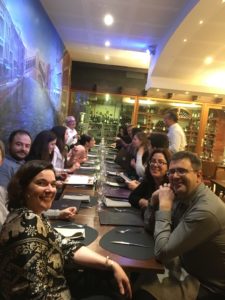
 As part of the House Poetics project we wanted to have the opportunity to discuss ideas about House societies with colleagues working on similar questions. The Aegis Research Group at UCLouvain has established an exciting tradition of annual conferences on topics of Aegean archaeology (see their impressive catalogue of publications here). So with the help of the wonderful MSCA funding and other sponsors from Belgium and USA, we put on a feast of Houses during December 2018. Here’s a round up of the proceedings.
Background and rationale of the workshop
 The research of the social organisation of prehistoric Aegean societies has been dominated by questions concerning the type and size of the basic social units. Attempts to answer such questions have explored a wide variety of fields, from architecture, to the organisation of economic activity and the production and consumption of material culture, to the analysis of kinship structures, with mixed results. The key stumbling block in these attempts was not so much that no single theoretical model could adequately describe the variability of evidence on the ground, but more importantly, that no existing approach could successfully capture activities, identities and social formations at the interstices of the more easily recognisable small- and large-scale units.
Some years ago, Levi-Strauss’s theory of House Societies gained popularity in archaeology and anthropology by virtue of its innovative understanding of collective action which offered alternative ways for approaching and analysing the organisation of ancient societies. Lévi-Strauss’s (1982: 174) definition of the House as “a moral person holding an estate made up of material and immaterial wealth which perpetuates itself through the transmission of its name, its fortune and its titles down a real or imaginary line, considered legitimate as long as this continuity can express itself in the language of kinship or of affinity, and most often of both” provided the opportunity for subsequent analyses to combine the examination of Houses as both physical and social structures, which operated beyond and in between the levels of the individual (small-scale unit) and the state (large-scale collective structure) (e.g. Carsten and Hugh-Jones 1995; Joyce and Gillespie 2000; Driessen 2010). However, while the flexibility and enormous diversity embodied in the House constitute clear advantages in our attempts to construct more accurate interpretations of ancient social organisation, a lot of the model’s features require greater critical scrutiny if Houses are not to be employed as just another static social typology.
 Thus, the workshop proposed to approach Houses as heuristic devices for exploring social relations and modelling social interactions in the past, viewing the House society model as an inherently flexible set of structuring principlescapturing relations, behaviours and patterns that subvert traditional categories of social interaction. The model’s many facets of material, social and political expression (for example, combining hierarchical and heterarchical structures; being focused on collective representation whilst allowing for the emergence of individual identities; deploying architectural elaboration as both a method of unification and differentiation), were well suited to the patterns and process of ancient Aegean societies which were worth exploring further.
Major themes emerging during the conference
Definitions/terminology. A key theme emerging from the outset of the discussions in the conference was the need for an adequate definition of the House and what distinguishes it from other similar terms, such as ‘’household”, “domestic or residential group” and so on. The definition provided by Levi-Strauss formed a central part of these considerations, but it quickly proved to 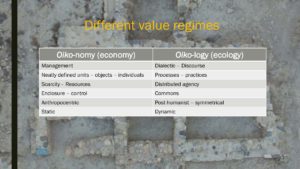 be restricting new insights rather than enabling more effective interpretations of our data. The more different papers tried to identify Houses by ticking a check-list of criteria, the more elusive they became. This brought to the fore the opening contention of the conference rationale, that, as Gillespie (2007: 38) also argued, the House as a way of thinking about social interaction is more useful when scholars are not interested in typologies “but in social processes and practices, particularly processes and practices across variously organized societies and processes and practices that transform societies over time”.
Temporality/fluidity: This temporal element of Houses formed another major theme in the conference discussion. The emergence, dominance and eventual dissolution of House practices through time was the focus of several presentations, and the prominence of chronological depth and inter-generational structures throughout the Bronze Age was analysed through various material, ritual and social perspectives. Of particular interest were approaches focusing on architecture that emphasized the strong interplay between enduring structures rebuilt in the same locations and residential fluidity which, nevertheless, made reference to inter-generational construction and use of space.
 Materiality, production and consumption. This was a very important aspect of how the theoretical premises of the House society model could be seen in action. Production and consumption patterns occupy a central role in most archaeological narratives of the past, perhaps because their material residue is more easily discoverable than other kinds of social practices, but more importantly because they offer the opportunity to analyse patterns and processes of organisation more closely, and therefore involve all different levels and scales of social action. New evidence from across the Aegean was examined from the perspectives of resource management, labour organisation, the allocation of rights and obligations, as well as through practices of sharing and collective consumption, within habitational or ritual and funerary contexts, to illustrate the multitude of ways in which a House structure might have been operationalised at different times and places.
Scalar and social dimensions. Linked to the previous theme, and underpinning the broader discussion throughout the conference, were issues of scale, in both its physical/material and social dimension: the size of Houses, the criteria for their membership and the extent of their social and political reach were recurring themes in this discussion. Here explicit cautions against objectifying the House as a discrete social typology to be ‘discovered’ or not in the archaeological record need to be heeded seriously. However, what emerged as a general conclusion out of the analysis of an astonishing depth and breadth of social interaction across the prehistoric Aegean, was a sense of a deep-rooted ontology of collective action expressed through enduring social behaviours that withstood drastic political changes.
 On the whole, the research presented at the conference offered a fresh and stimulating perspective on the usefulness of the House as a social model fitting to the Aegean context. As Levi-Strauss developed these ideas on the basis of specific anthropological evidence, discussions at the conference emphasised the need to evaluate the ideas and theories of Houses with close reference to each specific context under consideration. At the same time though, the persistence of recurrent and enduring collective behaviours with differential modes of affinity at their centre emerged as an overarching theme that merits further analysis.
We explore these themes in more detail in the forthcoming publication of the conference (to appear in 2020).
References
Carsten, J., & Hugh-Jones, S. (1995). About the House : Lévi-Strauss and beyond. Cambridge: Cambridge University Press.
Driessen, J. (2010). Spirit of Place: Minoan Houses as Major Actors. In D. J. Pullen (Ed.), Political Economies of the Aegean Bronze Age (pp. 35-65). Oxford: Oxbow books.
Gillespie, S. D. (2007). When is a House? . In A. Beck Robin (Ed.), The Durable House. House Society Models in Archaeology (pp. 25-50). Carbondale: Southern Illinois University.
Joyce, R. A., & Gillespie, S. D. (2000). Beyond kinship : social and material reproduction in house societies. Philadelphia: University of Pennsylvania Press.
Lévi-Strauss, C. (1982). The way of the masks. Seattle: University of Washington Press.
 The House Poetics project is coming to an end by September 2019. It’s been a blast of two years, gone in what seemed a breath! I am preparing the reports, and even though I have moaned extensively about having to do this (see my twitter feed @mariarelaki), they are actually so valuable for making you realise what and how much you have achieved in the space of these two years. There’s plenty more that I have not had the time to post here on the work done, but the webpage will continue to be updated beyond the official end of the project; after all, we never solve all the issues, and good research creates more questions than provides answers. But I wanted to finish by writing a short note on the experience of taking up the Marie Sklowdowska-Curie fellowship.
 So, as I mutter and moan trying to make one, last, deadline, here’s to you MSCA, may you long continue to support scholars of all shapes and colours! Cheers!
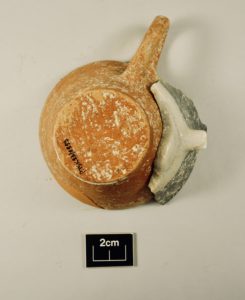 A real advantage of the House Poetics project is that it has allowed me to work across conventional categories and typologies. There are obviously practical reasons for why we divide archaeological finds into categories based on material and form, it is impossible to study everything all at once. As it is equally impossible for one person to have specialised knowledge of every type of artefact or ecofact that emerges from a field project. But there are a few problems from this system: a) our definitions of what -goes-with-what may not represent ancient categorisations (a lot of ink continues to be spilt about this; rightly so, I think); and b) this over-compartmentalisation of our material means that we are regularly missing connections that can only be grasped by looking across these categories.
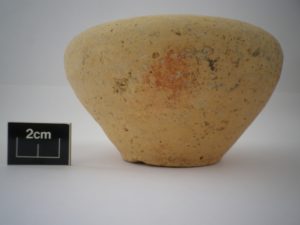 only encountered on stone. But to my surprise and delight, the more I looked the more examples kept cropping up, and not just of this rather specialised shape, but of other more mundane forms. Such interconnections are not easily explained by function (for example, a stone vase cooking pot is incredibly heavy, and more so when full), neither by trickster value (i.e. they are not meant to be substitutes of more ‘precious’ stuff) as they are consumed alongside each other. I continue to muse on these questions, but I am really warming to the idea that these have been created as sets. Especially since there’s also a range of small lids, of similar dimensions that could fit either stone, or ceramic vases of a range of shapes. This would make for such a colourful and versatile assemblage, created entirely at the interstices of what we consider different categories.
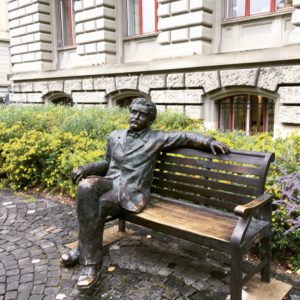
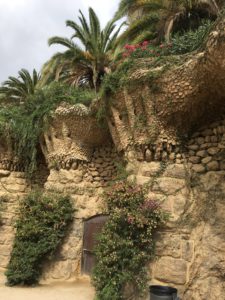 It has been a long time since I was able to attend a conference. This was entirely down to lack of funds, as such is the life of the precarious academic. But my H2020 Research Fellowship stipulated a very active strategy of communicating the project aims, progress and results and I had also forgotten how much I enjoyed participating in conferences back when I could. Going to large (massive even – the EAA2018 numbered well over 3k participants, almost matched by EAA2019 at Bern) conferences has not been the preferred way of current academic engagement and for good reasons too: the cost of such events (registration fees alone amount to the low three figures usually, adding hotel and food expenses to this results in exorbitant amounts) is prohibitive not just for early career scholars, but also for grant-poor colleagues in permanent positions. In addition, the environmental impact of academics flying around the globe to participate in such events has also attracted some critical attention (see the
  Online conferences held on twitter have been an innovative way to engage practitioners from a wide range of backgrounds and locations (see for example, the
  (a collaboration with Despina Catapoti, appearing in print during 2020 in the
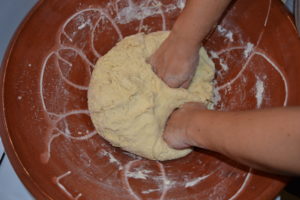
  The most interesting finding of this comparison, was that while ownership of resources was distinct, i.e. each family had its own house, land and other moveable property, access to facilities like bread ovens [necessary for the daily subsistence of each family] was shared, and what’s even more striking, shared smoothly, without conflict. An informal ‘booking’ system was at place, where each family would ‘book’ baking time each week, but more common was the pooling together of resources into large-scale bake offs: so, each family would bring their own portion of grain and they would also get the equivalent in baked goods, but they would contribute fuel and labour co-operatively so that the bread required by each different family in several weeks would be made in one baking event. This kind of event did not have the indexical features of what we often like to call ‘feasting’ in the archaeological record (although the precise meaning and material correlates of feasting are continuously re-assessed in recent scholarship) as it was more mundane and regular, however, it involved fairly large numbers of people, as most of the ‘nuclear’ families involved would comprise at least between 5 and 8 members, who would all participate in various ways and would need to be fed during the process.
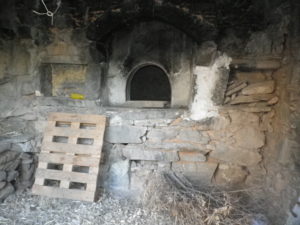 The other aspect that was of interest was the spatial arrangement of these ovens in distinct neighbourhoods around the village; I was able to map at least 5 surviving structures, whereas I also collected information about 5-6 others that were no longer in existence. This set of data requires a lot more analysis, but from a first look, it seems that oven structures were shared both within the broader kin group which did not always reside in close proximity, and amongst neighbours, who resided close to one another without sharing kin ties. The sharing of resources like the bread ovens was thus regulated both by functional necessity, i.e. needing to bake regularly, and convenience, i.e. needing a facility in relatively easy access. At the same time though, ‘patterns of sharing’ were evident, where families would have their ‘regular’ oven, whether access to that was provided through kin membership, or through neighbourhood residence; so family X would regularly bake in Oven A, even though they were not immediate blood relatives; while Family Y would only bake at their maternal bread Oven B, even though it was a long way from their actual house.
 The warmth of affective ties emerging through this sharing was striking in all the oral testimonies collected. This kind of emotional connection is not easily detected ‘in the ground’, from the material residue we deal with archaeologically, but it can be grasped through the long-term engagement with such practices, and this, archaeology can ‘recover’ well.
 We each made a little structure using the clay and anything else we could find around us, leaves, pebbles, twigs. I realise now how organically my ‘design’ developed, without preconceptions, just guided by the materiality of the clay and my desire to make something. Although we might have had a mental template (i.e. let’s build a ‘house’), the way we each engaged with the materials led to the emergence of completely new forms which were linked to completely new mental categories (a ‘fairy cave’; a ‘troll shop”).
 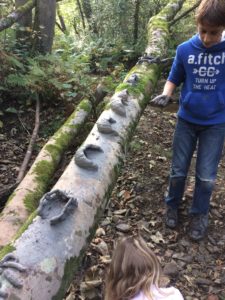 In a way, we still made use of a preconceived design but just not in the proscribed way that technological approaches advocate.
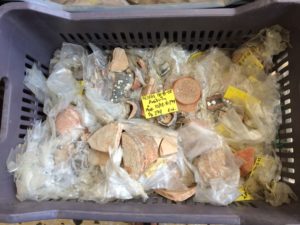 mice (they’ve eaten all the plastic bags, which meant re-bagging finds, which led to unexpected discoveries !) have actually led me to find stuff that I could not locate with the usual methods of cross-referencing catalogues and box labels.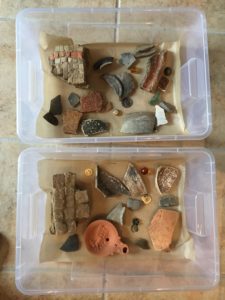

 The joy that is
 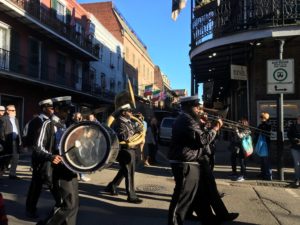 PS: The music in New Orleans was out of this world!
 Archaeologists are very familiar with assemblages; it is a key term and framework for our work. Assemblages are usually defined in two ways in archaeology: a) a collection of objects found together in the same context or b) a group of objects sharing common features, e.g. a lithic assemblage (Lucas 2012: 193-194). This well-worn definition has served generations of archaeologists in the field and in the library but is not without its problems.
 I tried to put this question at the core of the first presentation of the project at the Aegis Research Group workshop on December 2017. Speaking about theory is very hard, as you need to clearly impart abstract concepts to your audience so that they can follow your thinking and, more importantly, appreciate the innovation and the need for these different approaches. As I found out, it is always better to show people how this works in practice, rather than just telling them. I think I managed to convinced a few.